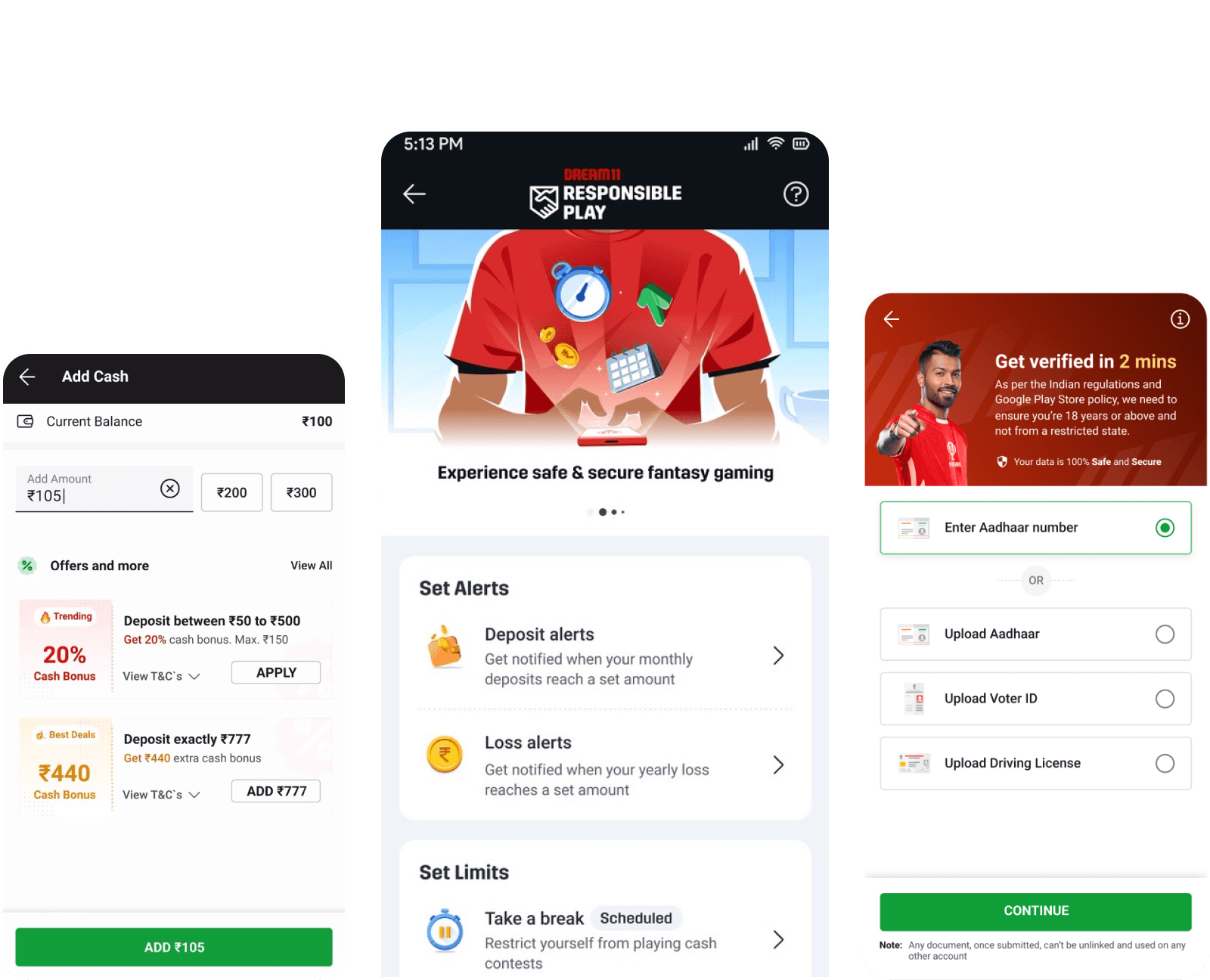
In 2023, a new 28% tax on every real-money gaming deposit in India forced Dream11 (India's largest fantasy sports platform, 250M+ users) to absorb the tax on users' behalf to protect their experience. The unintended result was a damaging cycle: users would deposit, play, win, withdraw, and deposit again, triggering a fresh 28% tax each time. Each new deposit cost the platform money.
The problem was no longer just financial. It was behavioural.
Following the 28% GST rule, product managers across Dream11 worked in parallel to develop strategies to protect revenue without alienating users.
The concepts they arrived at were inherently complex: withdrawal limits tied to behavioural scores, pending fund mechanics, opt-in reinvestment with bonus structures, and streak-based campaigns. My job was to translate each of these into product experiences that felt simple, fair, and trustworthy to users who had real money on the line. Working across four product surfaces, I shaped the UX, UI, and interaction design to ensure nothing felt punitive, confusing, or hidden..
I owned end-to-end UX, UI, and interaction design across all four product surfaces in collaboration with product, data, finance, and legal teams. My contribution was translating complex, cross-functionally defined strategies into product experiences that users could understand and trust. I shaped the withdrawal animation direction, the Play Winnings interaction design, and the No Withdrawal Streak campaign UX from concept through directional handoff.
In 2023, the Indian government introduced two major tax changes for real-money gaming platforms: TDS (Tax Deducted at Source, a withholding tax on winnings) and a 28% GST (Goods and Services Tax) on every new deposit.
Dream11 chose to absorb the GST on users' behalf. When a user deposited Rs 100 (approx. $1.20 USD), they received Rs 78 as play balance and Rs 22 as a discount bonus. The platform covered the tax gap. This kept users happy in the short term but created a serious sustainability problem.
The core behavioural loop looked like this: Deposit → Play → Win → Withdraw → Deposit again.
Every time a user cycled back to Deposit, the platform absorbed another 28%. The design challenge became: how do you reshape behaviour without making users feel controlled?
Before any design work began, the data and product teams developed the SPIN (Score for Play Intensity vs. Net withdrawal) framework, a behavioural scoring model that measured how many play cycles a user completed before withdrawing. The higher the SPIN score, the better: a high-scoring user kept their winnings circulating within the platform, reducing the number of fresh deposits and the GST events that came with them. A SPIN score below 3 indicated a user who withdrew after only 1 to 1.5 play cycles: deposit, play once or twice, cash out immediately.
This gave me a clear design target. I was not designing for all 250M users. I was designing for a specific behavioural segment: low-SPIN users who were profitable in theory but cost-heavy in practice. Every feature we built was aimed at nudging their score upward, one play cycle at a time.
Withdrawal patterns spiked during and immediately after IPL (the Indian Premier League, India's largest cricket tournament) matches. Users who had just won a contest would withdraw their winnings within minutes of a match ending rather than rolling them into the next contest.
Three behavioural patterns emerged:
Habitual withdrawers: Withdrew regardless of balance size. Withdrawing felt like closing the loop on a session, a psychological full stop rather than a financial decision.
Cautious players: Withdrew because they did not trust that money left in the app was safe. The platform had not yet earned enough confidence for them to leave funds sitting.
Responsive reinvesters: Would reuse winnings if the offer was compelling enough and the friction to reinvest was lower than the friction to withdraw.
The third cohort was the design opportunity. If we could reduce the friction to reinvest and increase the perceived value of staying in, some habitual withdrawers would shift behaviour over time.
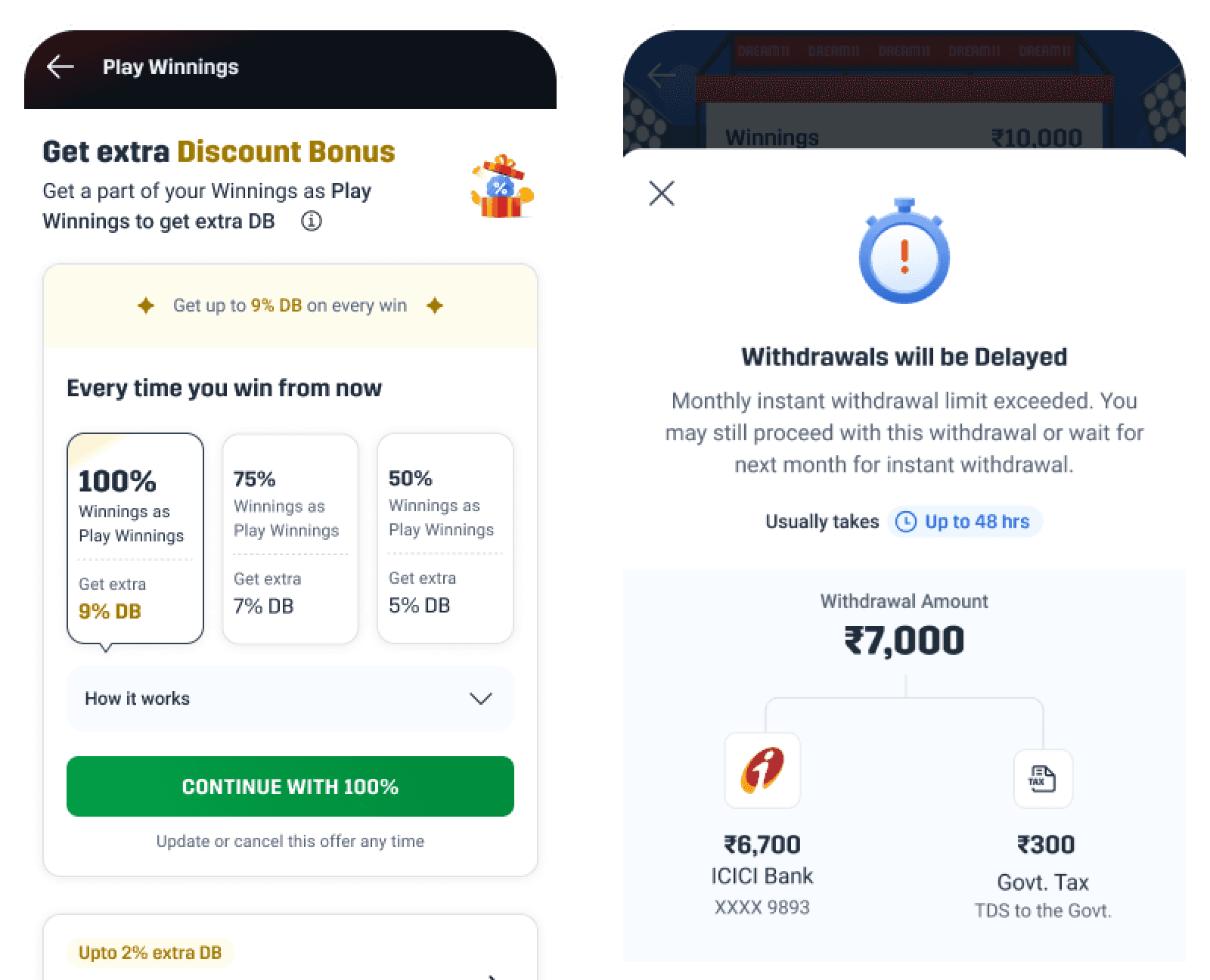
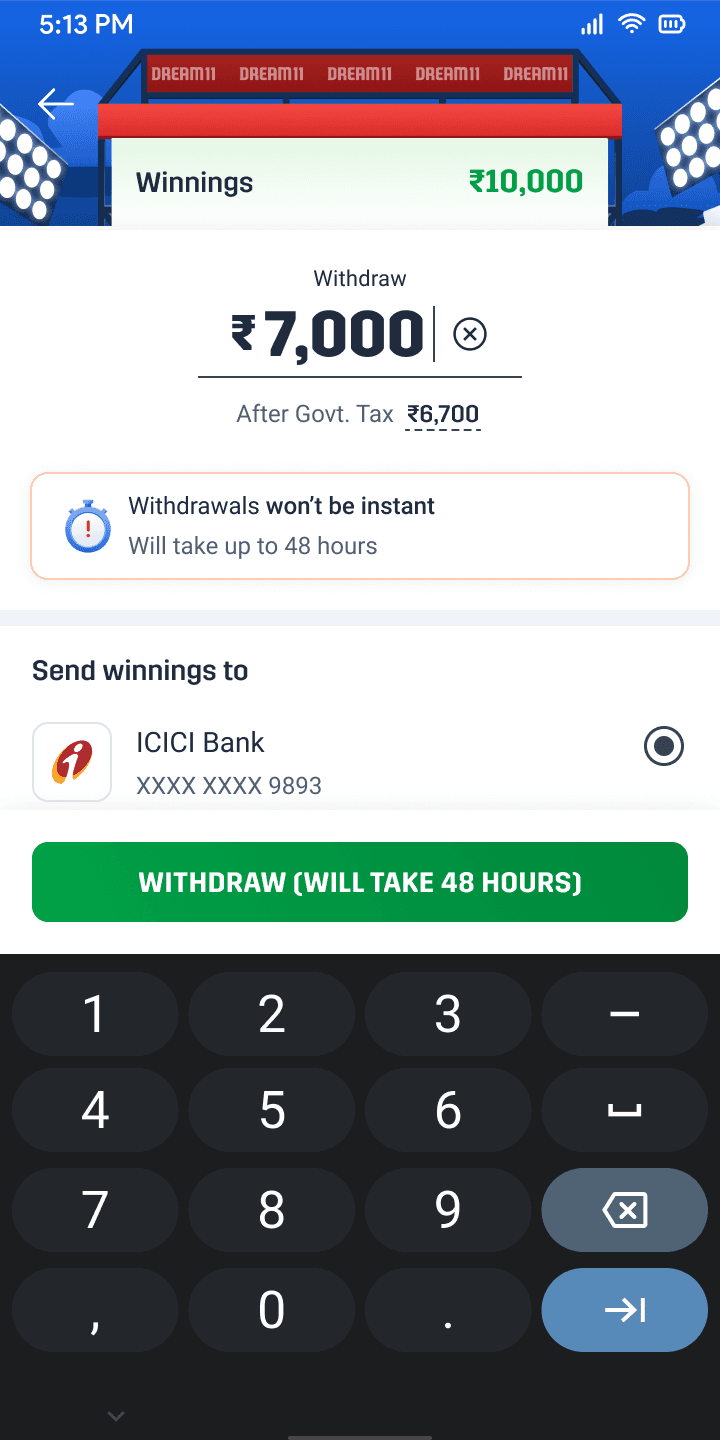
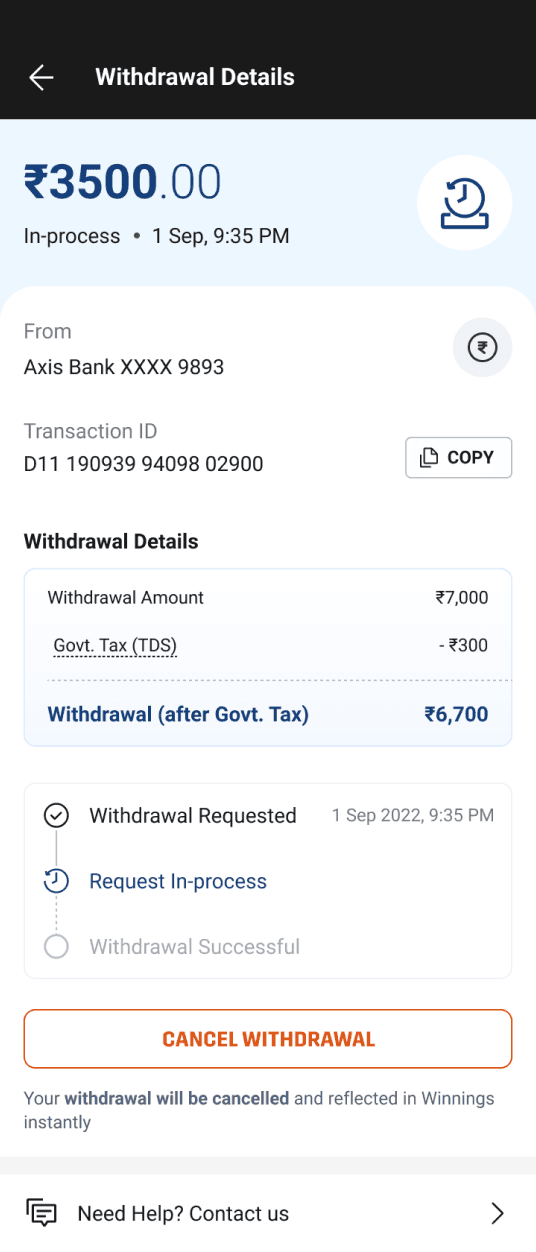
To reduce frequent withdrawals, the product team introduced daily and monthly instant withdrawal limits for users with a SPIN score below 3. Once a user exceeded their quota, further withdrawals moved to a 24-48 hour processing window instead of settling immediately.
My job was to make that delay feel fair, not punitive. Any ambiguity about where the money was or when it would arrive would erode trust and generate support tickets. I designed each state of the withdrawal flow to be direct, calm, and fully transparent: pending, processing, estimated arrival, and available options at each step. Every word of copy at each state was written to reassure, not deflect.
During this phase, I also led the design direction for a new withdrawal animation. The existing confirmation screen was functional but flat. It had none of Dream11's cricketing personality. Working with the animation team, I introduced subtle cricket-inspired motion cues into the withdrawal confirmation moment. A routine transaction became a small brand moment: familiar and lively without being distracting. The goal was to make even a limited withdrawal feel positive rather than blocked.
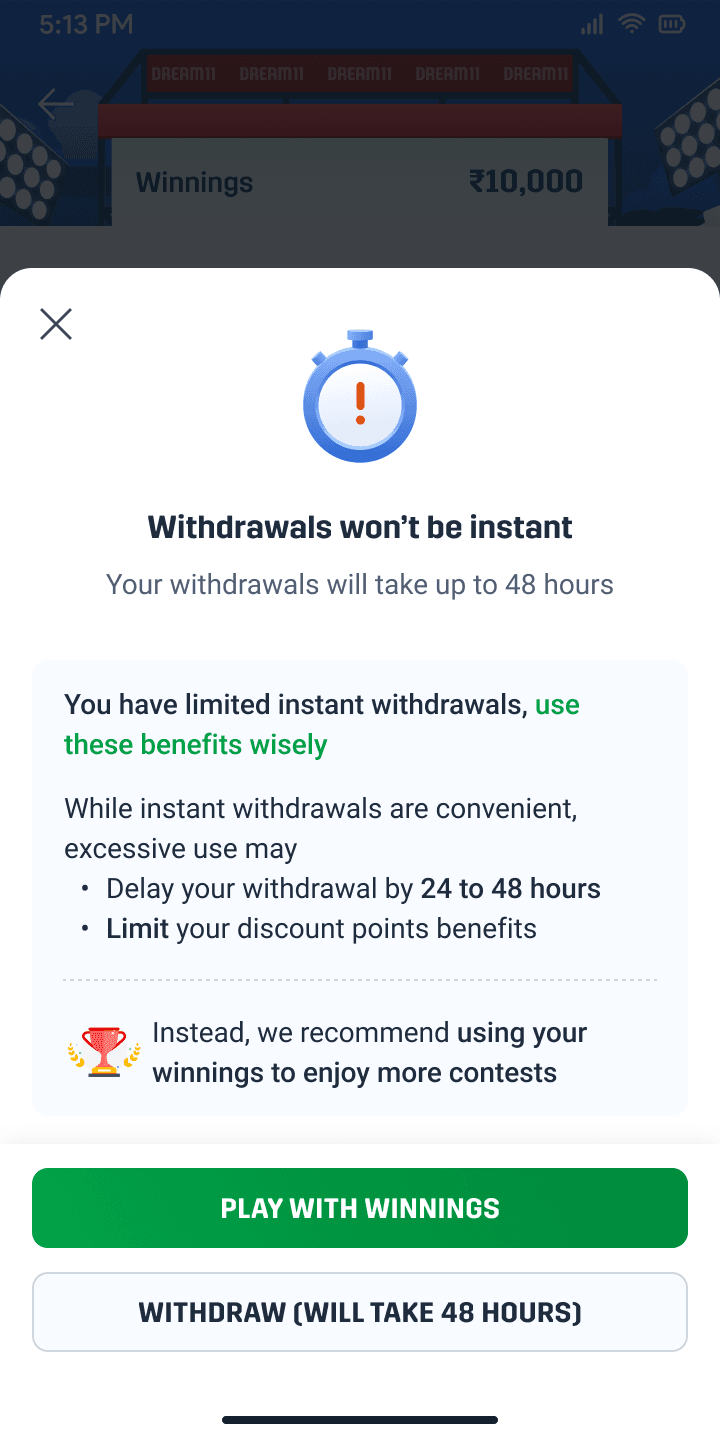
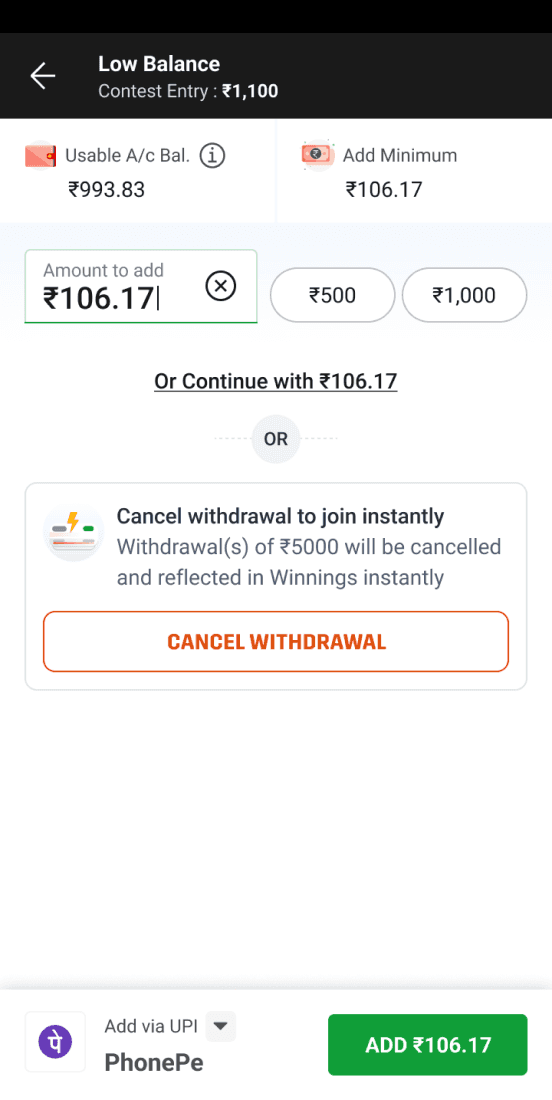
For users who had exceeded their instant withdrawal limit, withdrawn funds moved to a pending state. If those users then tried to deposit again to join a new contest, they faced a frustrating loop: their money was technically theirs but not immediately accessible.
The Cancel Withdrawal feature solved this exact moment. If a user in a pending withdrawal state tried to deposit again, we surfaced a prompt showing their pending amount and offering to cancel the withdrawal and return funds to their play balance instantly. No new deposit. No new GST event. One tap.
The timing of this prompt was the hardest design decision on this feature. Too early in the deposit flow and it felt manipulative. Too late and the user had already committed to a new deposit. I worked through multiple trigger-state scenarios with the product team before landing on the moment that felt helpful rather than coercive.
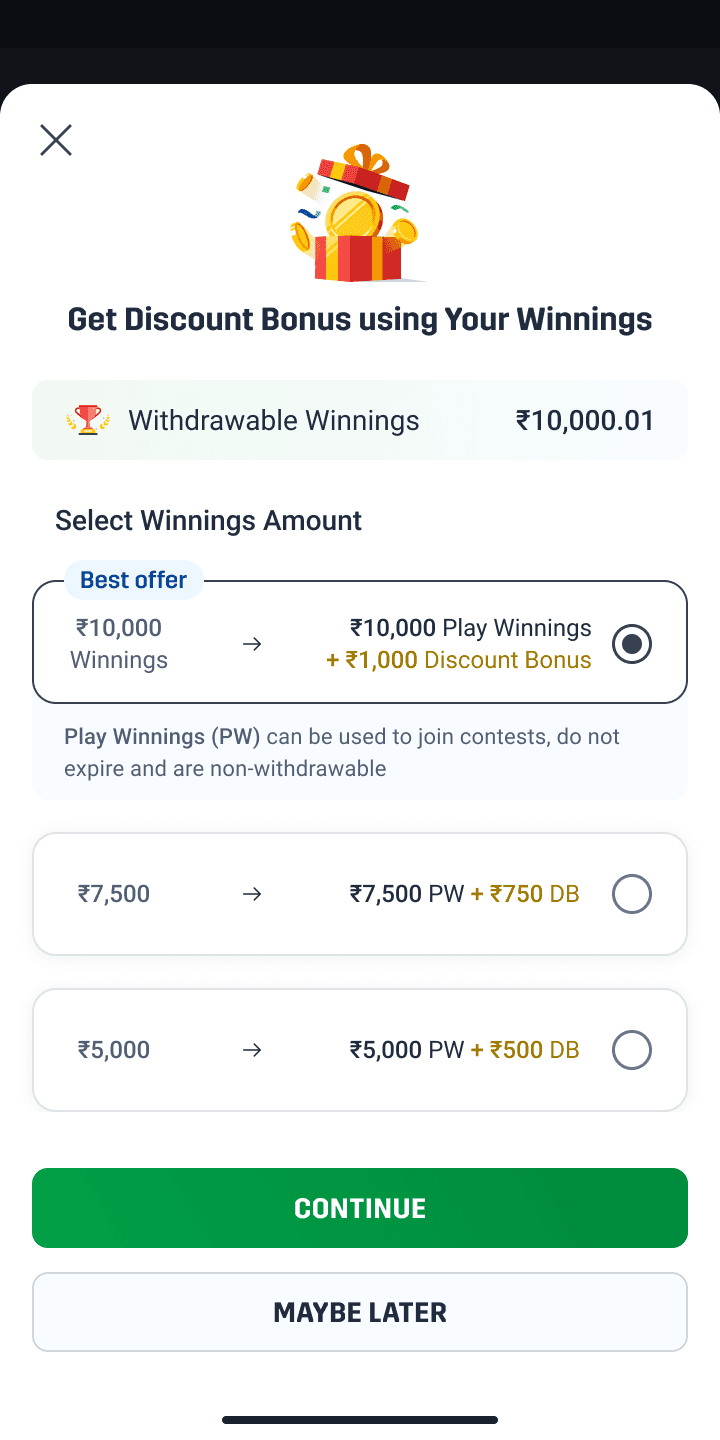
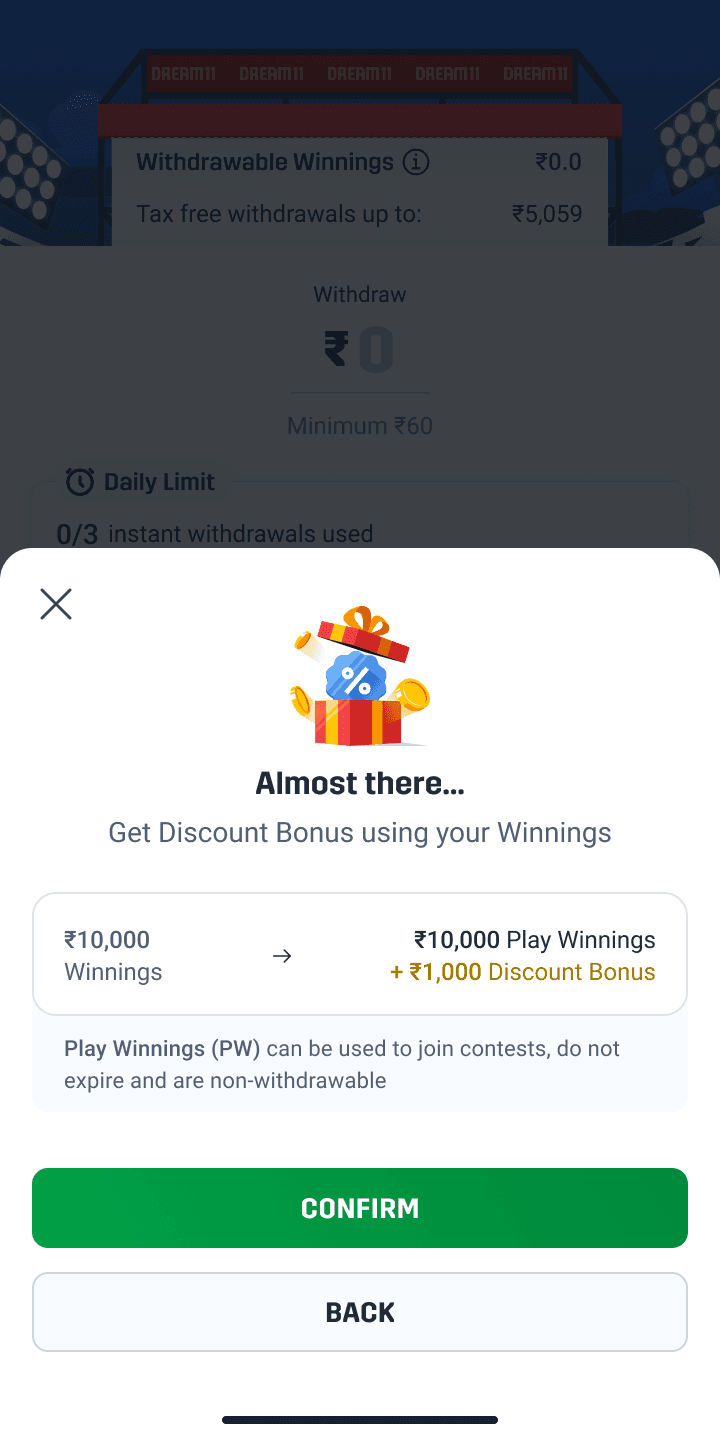
Play Winnings gave users a new way to use their contest earnings. Instead of withdrawing, they could choose to convert their winnings into play balance and get a 9% bonus on top.
It was a straightforward trade: a user who won Rs 100 (approx. $1.20 USD) could withdraw Rs 100, or keep playing with Rs 109. The extra 9% was the finance team's calculated sweet spot: generous enough to be genuinely attractive, sustainable enough to offset the GST cost of a future deposit.
The design challenge was making this feel like a real choice, not a nudge in disguise. I timed the prompt to appear right after a user won a contest, when they were already feeling good about the platform. And the framing always led with what they were gaining (Rs 109 to keep playing) rather than what they were giving up (the ability to withdraw that balance). Small distinction, big difference in how it landed.
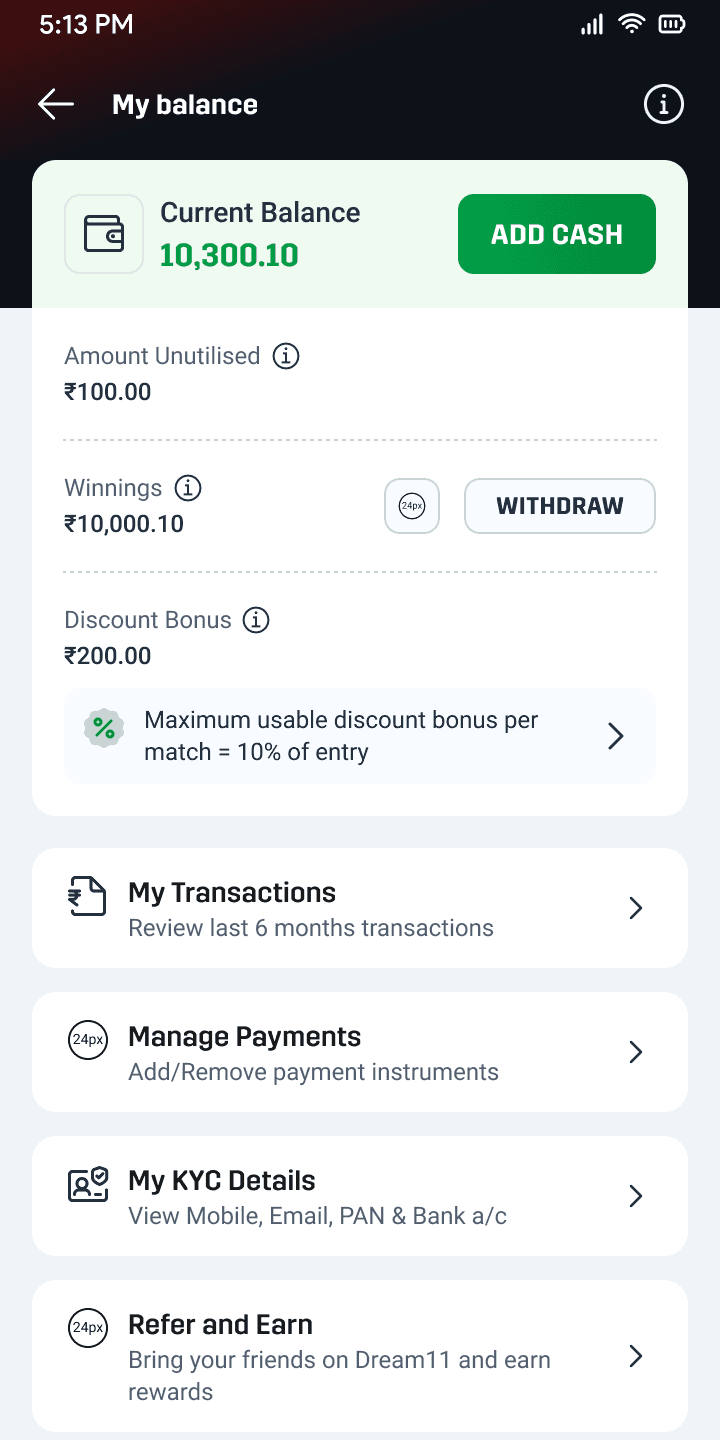
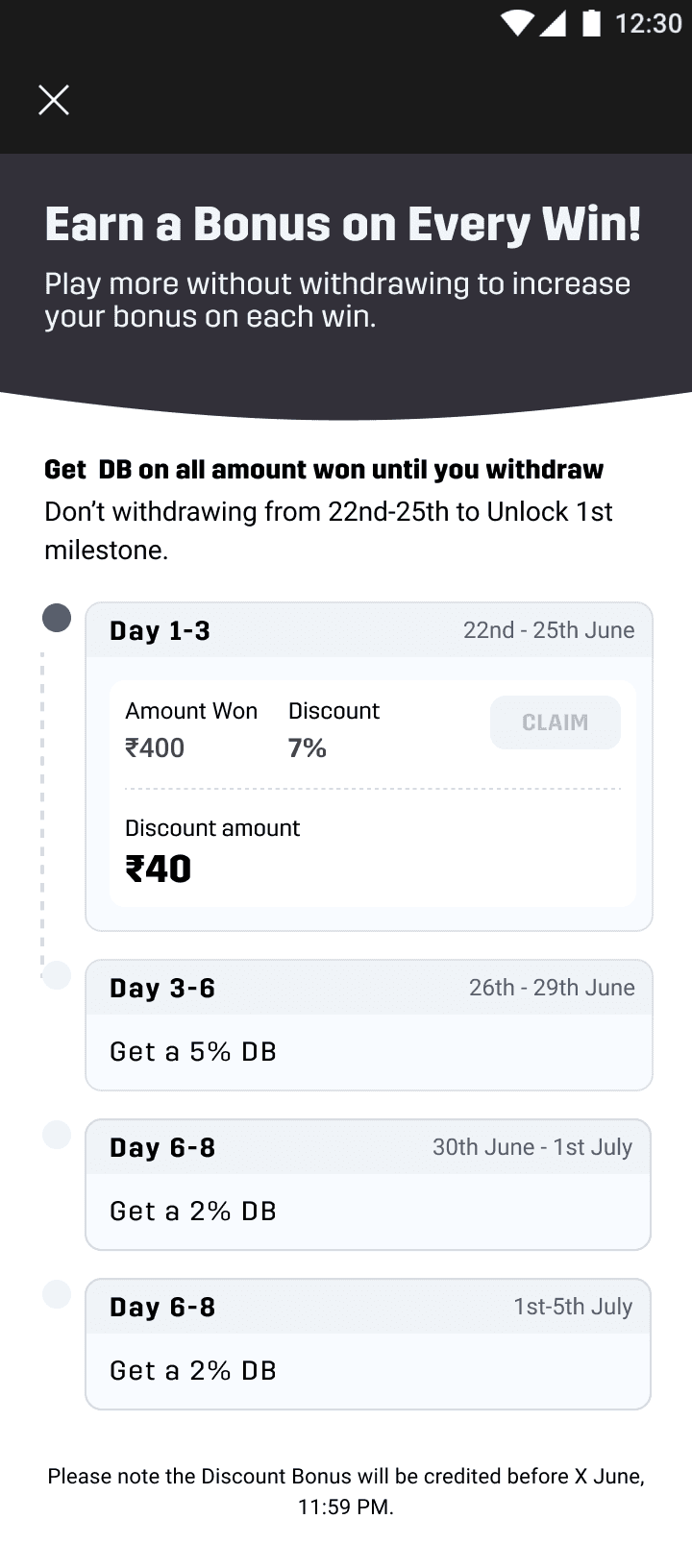
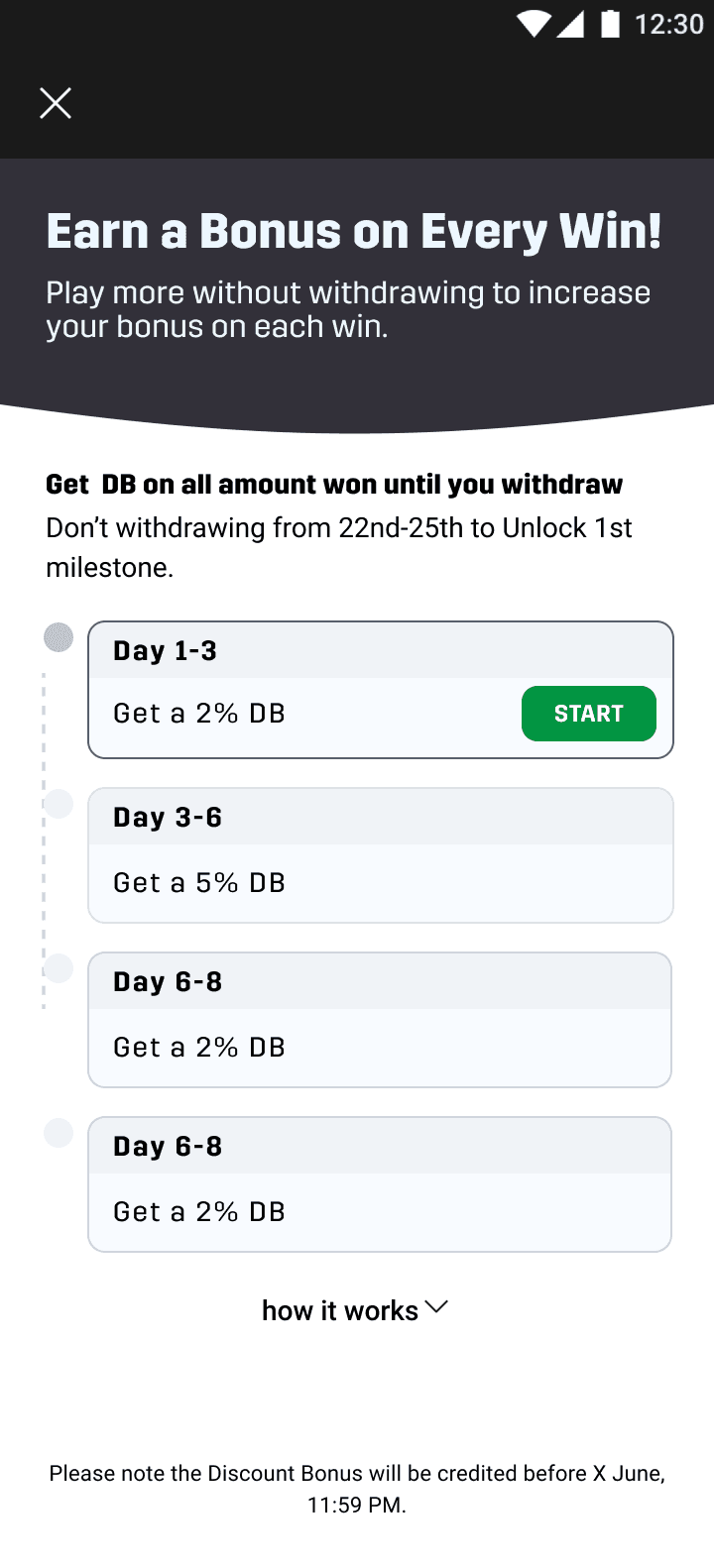
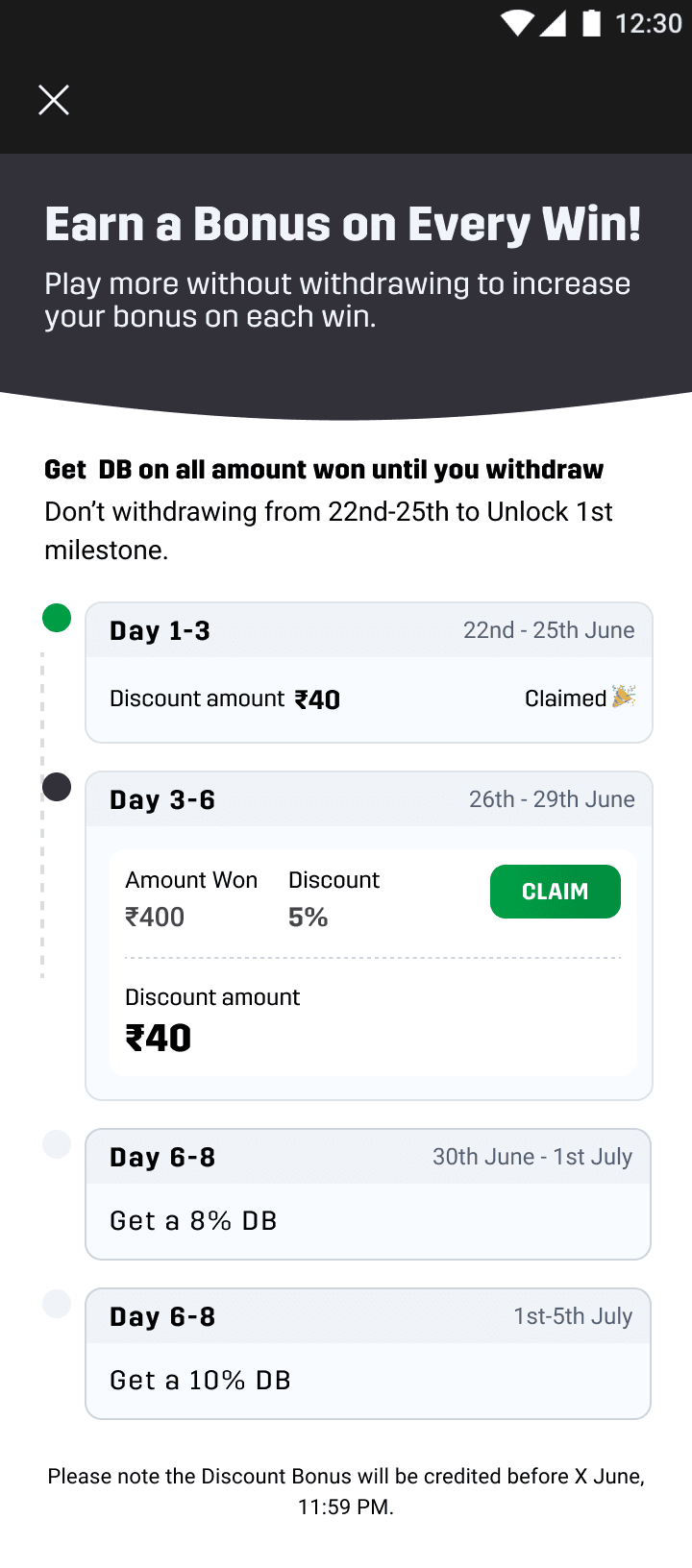
Working with the marketing and growth teams, I shaped the UX direction for the No Withdrawal Streak campaign. Users who played consecutive days using their existing balance without making a fresh withdrawal earned bonus credits scaled to their streak length.
The gamification had to feel like recognition, not a trap. If users sensed the campaign existed to stop them accessing their money, trust would drop immediately. Campaign copy and visual design leaned into the streak identity: daily progress indicators, a clear reward endpoint, and celebratory microcopy when a streak was maintained. I delivered directional UX across in-app surfaces including the home nudge, the streak tracker, and the reward reveal state.
The biggest surprise was the voice feature. We assumed that bilingual voice support would resonate strongly with tier-2 and tier-3 users who are more comfortable in Hindi than English. It landed at 2–3% adoption. Quick-reply chips, which require no audio at all, landed at 30–40%. That gap taught me something I will carry into every AI project: do not design for what users should want. Design for what they are actually comfortable with. If I were starting again, I would spend more time upfront researching how these users interact with voice features in other apps they already use, understand the hesitation, and then decide whether to build voice at all.
The deeper lesson for AI product design: when you are building for mass-market audiences, simplicity is not a compromise. It is the strategy. Users do not need to know there is AI behind the experience. They just need it to work instantly and feel familiar. Overcomplicating the experience, even with well-intentioned features, can make users feel excluded rather than helped. Good design, with or without AI, should always lower the barrier. Never raise it